At Pixelspaces, CGI visualisation is treated as part of the design process, not a final add-on once decisions have already been made.
That approach has been shaped by years of working directly alongside interior designers, architects, and property developers — and by seeing first-hand where traditional visualisation workflows can slow projects down.
Design teams move fast. Decisions change. Site conditions evolve. Planning deadlines appear with very little warning. CGI only adds real value when it can keep pace with that reality.
Working Inside the Design Process
One of the biggest advantages Pixelspaces offers is the ability to work within design teams rather than operating remotely at arm’s length.
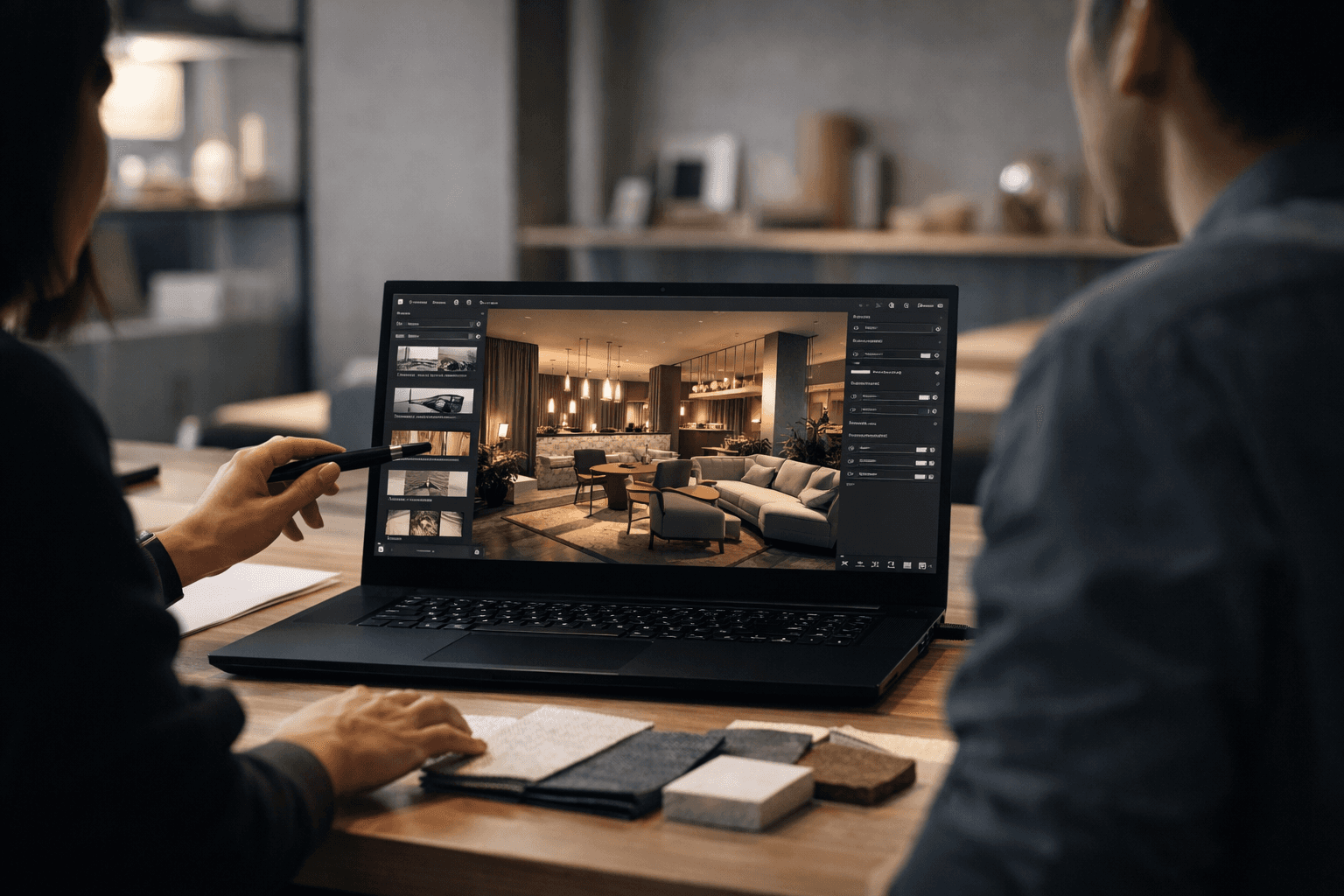
Because I work from a high-end mobile workstation, I can embed myself in a studio environment when needed — collaborating side by side with designers and architects. This removes the usual back-and-forth of emails, mark-ups, and delayed revisions, replacing it with real-time design conversations.
Instead of explaining changes, we explore them together.
This approach is particularly valuable during key design stages where clarity and speed matter most.
Interior Design: Exploring Ideas in Real Time
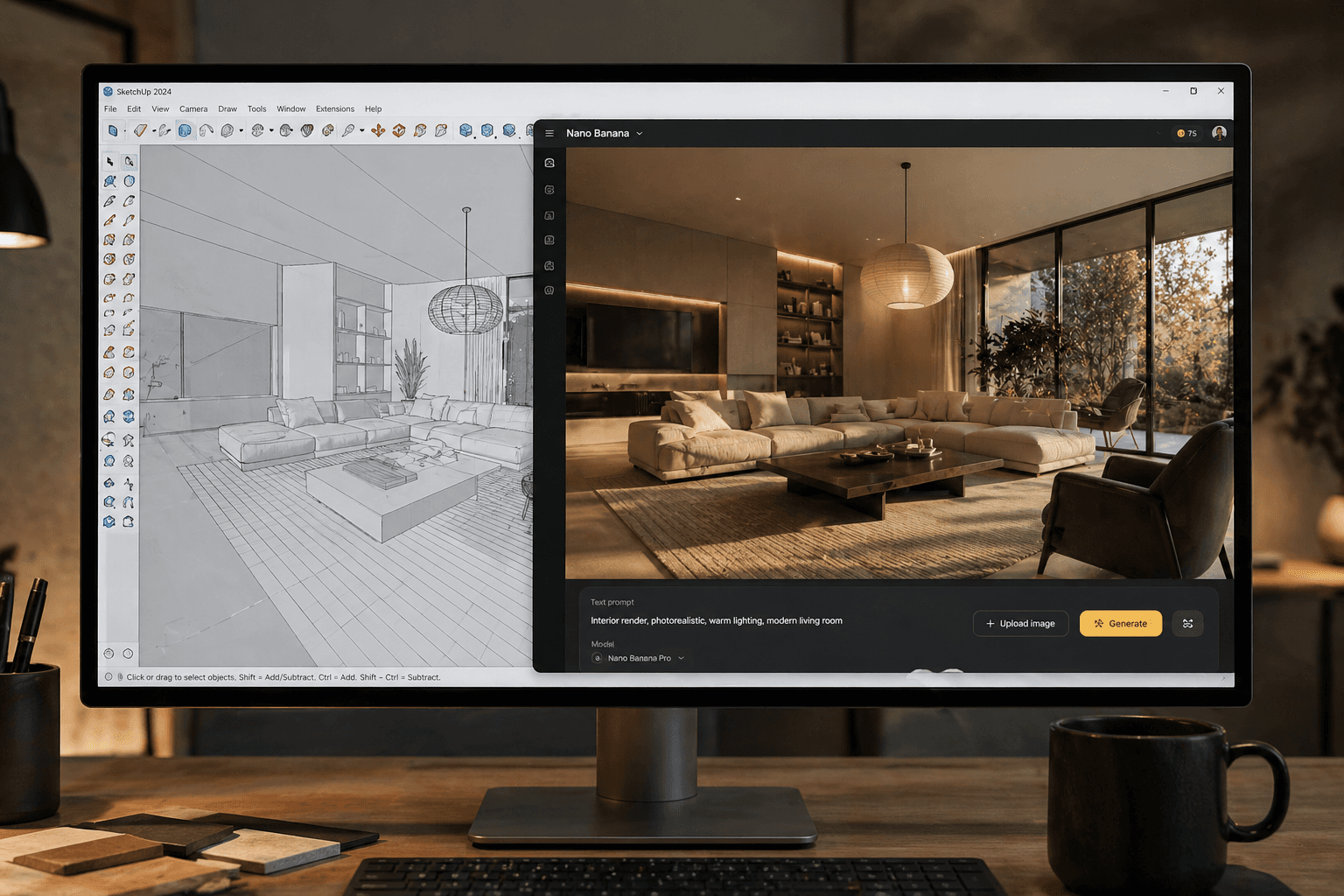
For interior designers, CGI becomes a live design tool rather than a static output.
Working interactively allows us to:
• Translate early concepts into clear, spatially accurate visuals
• Trial different finishes, materials, and colour palettes instantly
• Swap furniture layouts to test scale, flow, and functionality
• Fine-tune lighting and mood without waiting for re-renders
Designers don’t need to commit prematurely. Options can be explored, compared, and refined collaboratively — helping clients feel confident in decisions before anything is ordered or built.
Architecture: Speed and Accuracy for Planning & Design Development
For architectural teams, speed and accuracy are often critical — particularly when visuals are needed for planning submissions, design reviews, or stakeholder presentations.
Using GPU-based rendering with V-Ray and V-Ray Vantage, Pixelspaces can turn around:
• Planning visuals under tight deadlines
• Quick design iterations as layouts, massing, or materials evolve
• Accurate representations that align with technical drawings
Because rendering is real-time and interactive, changes don’t stall the process. Adjustments can be made immediately, keeping projects moving without compromising visual quality or intent.
Property Developers: Visuals That Sell — and Stay Accurate
For property developers, CGI serves two essential purposes: clarity and confidence.
Marketing imagery needs to:
• Accurately reflect the final built product
• Appeal to buyers quickly
• Adapt when specifications or layouts change
Pixelspaces supports this by producing high-quality, accurate marketing visuals that can be updated quickly as decisions evolve — whether that’s a change in finishes, furniture packages, or layout revisions following site updates.
When things change on site (as they often do), fast visual updates help teams make informed decisions and keep marketing aligned with reality.
Supporting Fast Decisions When It Matters Most
Across interiors, architecture, and property development, one theme comes up repeatedly: the need for speed without guesswork.
Being able to visualise changes before they’re built allows teams to:
• Make confident design decisions under pressure
• Resolve issues early rather than on site
• Communicate intent clearly to clients, contractors, and stakeholders
Pixelspaces exists to support those moments — when a quick, accurate visual can unlock progress, avoid delays, and keep a project on track.
A Collaborative, Modern Approach to CGI Visualisation
This way of working isn’t about technology for its own sake. It’s about using modern real-time rendering tools and a collaborative mindset to fit naturally into how design teams already operate.
By combining industry experience, embedded collaboration, and GPU-driven workflows, Pixelspaces delivers CGI visualisation that feels less like an external service — and more like an extension of the design team.
At Pixelspaces, CGI visualisation is treated as part of the design process, not a final add-on once decisions have already been made.
That approach has been shaped by years of working directly alongside interior designers, architects, and property developers — and by seeing first-hand where traditional visualisation workflows can slow projects down.
Design teams move fast. Decisions change. Site conditions evolve. Planning deadlines appear with very little warning. CGI only adds real value when it can keep pace with that reality.
Working Inside the Design Process
One of the biggest advantages Pixelspaces offers is the ability to work within design teams rather than operating remotely at arm’s length.
Because I work from a high-end mobile workstation, I can embed myself in a studio environment when needed — collaborating side by side with designers and architects. This removes the usual back-and-forth of emails, mark-ups, and delayed revisions, replacing it with real-time design conversations.
Instead of explaining changes, we explore them together.
This approach is particularly valuable during key design stages where clarity and speed matter most.
Interior Design: Exploring Ideas in Real Time
For interior designers, CGI becomes a live design tool rather than a static output.
Working interactively allows us to:
• Translate early concepts into clear, spatially accurate visuals
• Trial different finishes, materials, and colour palettes instantly
• Swap furniture layouts to test scale, flow, and functionality
• Fine-tune lighting and mood without waiting for re-renders
Designers don’t need to commit prematurely. Options can be explored, compared, and refined collaboratively — helping clients feel confident in decisions before anything is ordered or built.
Architecture: Speed and Accuracy for Planning & Design Development
For architectural teams, speed and accuracy are often critical — particularly when visuals are needed for planning submissions, design reviews, or stakeholder presentations.
Using GPU-based rendering with V-Ray and V-Ray Vantage, Pixelspaces can turn around:
• Planning visuals under tight deadlines
• Quick design iterations as layouts, massing, or materials evolve
• Accurate representations that align with technical drawings
Because rendering is real-time and interactive, changes don’t stall the process. Adjustments can be made immediately, keeping projects moving without compromising visual quality or intent.
Property Developers: Visuals That Sell — and Stay Accurate
For property developers, CGI serves two essential purposes: clarity and confidence.
Marketing imagery needs to:
• Accurately reflect the final built product
• Appeal to buyers quickly
• Adapt when specifications or layouts change
Pixelspaces supports this by producing high-quality, accurate marketing visuals that can be updated quickly as decisions evolve — whether that’s a change in finishes, furniture packages, or layout revisions following site updates.
When things change on site (as they often do), fast visual updates help teams make informed decisions and keep marketing aligned with reality.
Supporting Fast Decisions When It Matters Most
Across interiors, architecture, and property development, one theme comes up repeatedly: the need for speed without guesswork.
Being able to visualise changes before they’re built allows teams to:
• Make confident design decisions under pressure
• Resolve issues early rather than on site
• Communicate intent clearly to clients, contractors, and stakeholders
Pixelspaces exists to support those moments — when a quick, accurate visual can unlock progress, avoid delays, and keep a project on track.
A Collaborative, Modern Approach to CGI Visualisation
This way of working isn’t about technology for its own sake. It’s about using modern real-time rendering tools and a collaborative mindset to fit naturally into how design teams already operate.
By combining industry experience, embedded collaboration, and GPU-driven workflows, Pixelspaces delivers CGI visualisation that feels less like an external service — and more like an extension of the design team.