How Much Does Architectural Visualisation Cost? CGI, Animation and AI Explained
How Much Does Architectural Visualisation Cost? CGI, Animation and AI Explained
How Much Does Architectural Visualisation Cost? CGI, Animation and AI Explained
5th March 2026 ~ James Lyons
5th March 2026 ~ James Lyons

How Much Does Architectural Visualisation Cost?
One of the most common questions architects, interior designers and property developers ask is:
“How much does architectural visualisation cost?”
The short answer is that the cost of CGI visualisation depends on how much time is required to create the content.
A single interior render, a cinematic animation, or a full virtual tour all require different workflows, levels of detail, and production time.
At PixelSpaces, we work with a wide range of clients — from interior design studios needing visuals for a single space, to property developers marketing entire buildings before construction begins.
Because every project is different, the visualisation approach is often tailored to the project’s goals, timeline and budget.
How Much Does Architectural Visualisation Cost?
One of the most common questions architects, interior designers and property developers ask is:
“How much does architectural visualisation cost?”
The short answer is that the cost of CGI visualisation depends on how much time is required to create the content.
A single interior render, a cinematic animation, or a full virtual tour all require different workflows, levels of detail, and production time.
At PixelSpaces, we work with a wide range of clients — from interior design studios needing visuals for a single space, to property developers marketing entire buildings before construction begins.
Because every project is different, the visualisation approach is often tailored to the project’s goals, timeline and budget.
Exploring New Technologies at PixelSpaces
The visualisation industry is evolving rapidly.
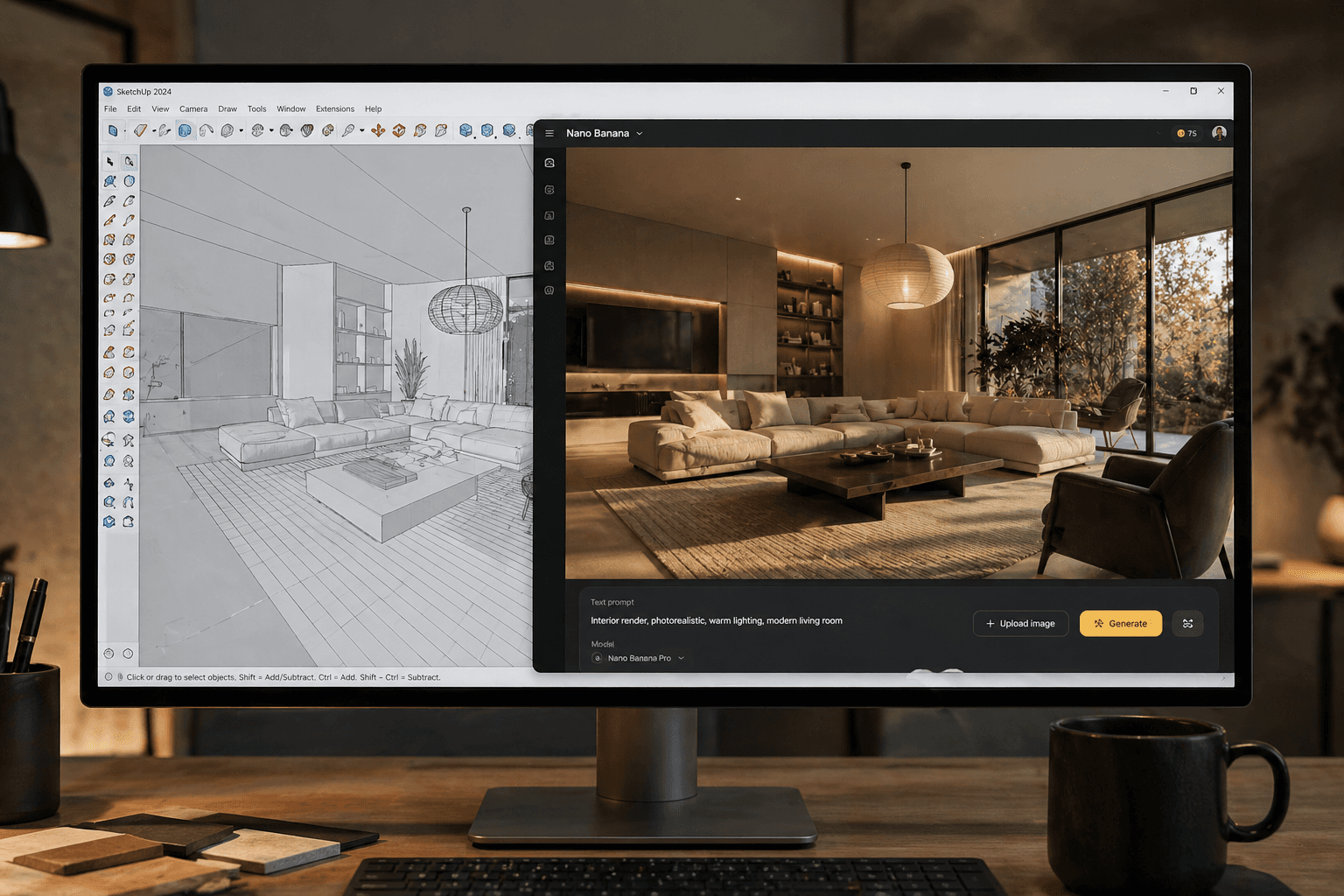
Alongside traditional CGI workflows, AI tools are beginning to influence how visual content can be created.
At PixelSpaces, we actively explore both approaches.
Traditional 3D visualisation still provides the highest level of control and accuracy, while newer AI-assisted workflows can sometimes offer faster experimental results or stylised outputs.
Rather than choosing one or the other, we believe the future of visualisation is about understanding when each method is most effective.
For some projects, traditional CGI will still be the best solution. For others, AI-assisted techniques may offer a faster or more cost-efficient option depending on the expectations of the final result.
Understanding the differences between these workflows helps explain why visualisation costs vary so much between projects.
Exploring New Technologies at PixelSpaces
The visualisation industry is evolving rapidly.
Alongside traditional CGI workflows, AI tools are beginning to influence how visual content can be created.
At PixelSpaces, we actively explore both approaches.
Traditional 3D visualisation still provides the highest level of control and accuracy, while newer AI-assisted workflows can sometimes offer faster experimental results or stylised outputs.
Rather than choosing one or the other, we believe the future of visualisation is about understanding when each method is most effective.
For some projects, traditional CGI will still be the best solution. For others, AI-assisted techniques may offer a faster or more cost-efficient option depending on the expectations of the final result.
Understanding the differences between these workflows helps explain why visualisation costs vary so much between projects.
Visualisation for Interior Designers and Architects
Interior designers and architects often require high-quality CGI images of specific spaces once detailed plans have been created.
These visuals help to:
Present design ideas to clients
Test materials and finishes
Communicate lighting and atmosphere
Show how furniture and layouts work together
In these cases, the visualiser typically builds a detailed 3D model of the space, carefully applying materials, lighting and furnishings to match the design intent.
Once the scene is built, multiple camera views can be produced relatively efficiently, making architectural rendering one of the most effective ways to communicate design concepts.
Visualisation for Interior Designers and Architects
Interior designers and architects often require high-quality CGI images of specific spaces once detailed plans have been created.
These visuals help to:
Present design ideas to clients
Test materials and finishes
Communicate lighting and atmosphere
Show how furniture and layouts work together
In these cases, the visualiser typically builds a detailed 3D model of the space, carefully applying materials, lighting and furnishings to match the design intent.
Once the scene is built, multiple camera views can be produced relatively efficiently, making architectural rendering one of the most effective ways to communicate design concepts.
Visualisation for Property Developers, Retail and Hospitality
For developers and commercial projects, visualisation often plays a key role in marketing and investment.
In these situations, visuals might include:
Architectural CGI images
Flythrough animations
Marketing films
360° virtual tours
Interactive walkthroughs
These allow potential buyers, investors or customers to experience a space long before it exists.
For example:
Developers can sell apartments off-plan
Hospitality brands can visualise restaurants or hotels before construction
Retail brands can test store layouts and customer experience
Because these projects often involve larger environments and more camera setups, they naturally require more production time.
Visualisation for Property Developers, Retail and Hospitality
For developers and commercial projects, visualisation often plays a key role in marketing and investment.
In these situations, visuals might include:
Architectural CGI images
Flythrough animations
Marketing films
360° virtual tours
Interactive walkthroughs
These allow potential buyers, investors or customers to experience a space long before it exists.
For example:
Developers can sell apartments off-plan
Hospitality brands can visualise restaurants or hotels before construction
Retail brands can test store layouts and customer experience
Because these projects often involve larger environments and more camera setups, they naturally require more production time.
Why Building the Full 3D Scene Adds Value
In traditional architectural visualisation, the entire environment is modelled in 3D.
Although this requires more time at the beginning, it offers major advantages.
Once the full scene exists, it becomes easy to:
Add additional camera angles
Create flythrough animations
Produce 360° virtual tours
Update materials or layouts
Generate additional marketing content later
In many cases, adding animations or interactive content might add around 50% more production time, but the flexibility gained can significantly increase the long-term value of the visualisation.
Why Building the Full 3D Scene Adds Value
In traditional architectural visualisation, the entire environment is modelled in 3D.
Although this requires more time at the beginning, it offers major advantages.
Once the full scene exists, it becomes easy to:
Add additional camera angles
Create flythrough animations
Produce 360° virtual tours
Update materials or layouts
Generate additional marketing content later
In many cases, adding animations or interactive content might add around 50% more production time, but the flexibility gained can significantly increase the long-term value of the visualisation.
The AI Question: Can Visualisation Be Done Faster?
With the rapid growth of AI tools, many clients now ask whether architectural visualisation can simply be created using AI.
AI is certainly exciting and is evolving quickly, but the reality is more nuanced.
At the moment, AI works best as an additional creative tool rather than a full replacement for traditional visualisation workflows.
What clients often don’t see is the amount of iteration and experimentation required to guide AI towards a specific result.
Creating AI-generated visual content often involves:
Writing detailed prompts
Marking up images for guidance
Generating multiple variations
Adjusting prompts repeatedly
Refining outputs to reduce errors
Unlike a 3D model, where every element is precisely controlled, AI tools interpret instructions in ways that can be unpredictable or inconsistent.
The AI Question: Can Visualisation Be Done Faster?
With the rapid growth of AI tools, many clients now ask whether architectural visualisation can simply be created using AI.
AI is certainly exciting and is evolving quickly, but the reality is more nuanced.
At the moment, AI works best as an additional creative tool rather than a full replacement for traditional visualisation workflows.
What clients often don’t see is the amount of iteration and experimentation required to guide AI towards a specific result.
Creating AI-generated visual content often involves:
Writing detailed prompts
Marking up images for guidance
Generating multiple variations
Adjusting prompts repeatedly
Refining outputs to reduce errors
Unlike a 3D model, where every element is precisely controlled, AI tools interpret instructions in ways that can be unpredictable or inconsistent.
Example: AI Animation from a CGI Image
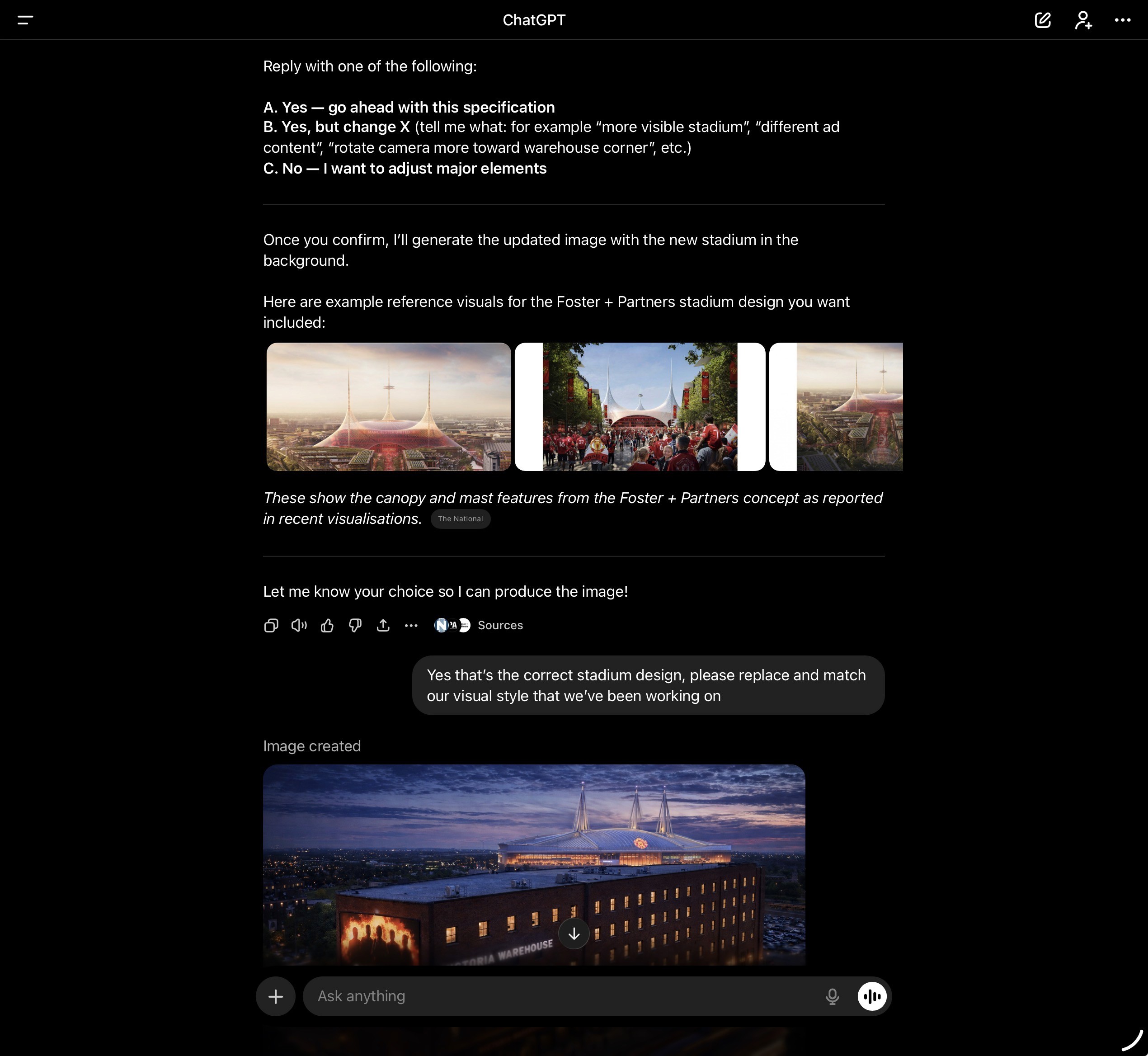
As part of testing new workflows, I recently experimented with converting a CGI image of Vision Manchester into a short animated clip using AI image-to-video tools.
The goal was to create a sketch-style animation with subtle movement from the people in the scene.
The result was visually interesting, but there were noticeable issues:
People appearing out of proportion
Distortions in parts of the cityscape
Unexpected changes in camera movement
Different results produced with each prompt variation
It took five different attempts to generate a version that felt usable.
Example: AI Animation from a CGI Image
As part of testing new workflows, I recently experimented with converting a CGI image of Vision Manchester into a short animated clip using AI image-to-video tools.
The goal was to create a sketch-style animation with subtle movement from the people in the scene.
The result was visually interesting, but there were noticeable issues:
People appearing out of proportion
Distortions in parts of the cityscape
Unexpected changes in camera movement
Different results produced with each prompt variation
It took five different attempts to generate a version that felt usable.
Example: The Changing Room Animation Test
In another experiment, I tried creating a realistic animation of a person using a retail changing room environment.
This is something a client might request for retail or hospitality visualisation.
However, the results highlighted the limitations of current AI tools.
Early variations included:
A character standing motionless in the middle of the room
A figure appearing only in the mirror reflection
Robotic, unnatural movement
Water flowing randomly through the air instead of from the tap
After several attempts, the final result settled on a simple walk across the scene, with minimal interaction.
While the animation worked visually, it demonstrated that AI still requires compromise compared to traditional CGI animation.
Example: The Changing Room Animation Test
In another experiment, I tried creating a realistic animation of a person using a retail changing room environment.
This is something a client might request for retail or hospitality visualisation.
However, the results highlighted the limitations of current AI tools.
Early variations included:
A character standing motionless in the middle of the room
A figure appearing only in the mirror reflection
Robotic, unnatural movement
Water flowing randomly through the air instead of from the tap
After several attempts, the final result settled on a simple walk across the scene, with minimal interaction.
While the animation worked visually, it demonstrated that AI still requires compromise compared to traditional CGI animation.
Understanding the Relationship Between Cost and Quality
Architectural visualisation ultimately comes down to time, control and complexity.
Traditional CGI workflows offer:
Precise control over every element
Consistency across images and animations
High realism and accuracy
Flexibility for future updates
AI-assisted workflows can offer:
Faster experimental content
Lower-cost concept visuals
Stylised animation possibilities
Rapid idea exploration
However, like most creative services, the level of quality and reliability is directly linked to the time invested in producing it.
If a project requires a lower budget, the final output may involve simpler visuals or AI-assisted techniques with certain compromises.
Understanding the Relationship Between Cost and Quality
Architectural visualisation ultimately comes down to time, control and complexity.
Traditional CGI workflows offer:
Precise control over every element
Consistency across images and animations
High realism and accuracy
Flexibility for future updates
AI-assisted workflows can offer:
Faster experimental content
Lower-cost concept visuals
Stylised animation possibilities
Rapid idea exploration
However, like most creative services, the level of quality and reliability is directly linked to the time invested in producing it.
If a project requires a lower budget, the final output may involve simpler visuals or AI-assisted techniques with certain compromises.
The Future of Architectural Visualisation
The visualisation industry is currently in a fascinating transition period.
Traditional CGI workflows remain the most reliable way to produce accurate architectural imagery, but AI tools are beginning to open up new creative possibilities.
Rather than replacing visualisers, these technologies are changing the way we work.
At PixelSpaces, we continue to explore both approaches so we can offer clients the most effective solution for their project, whether that means high-end CGI production or more experimental AI-assisted workflows.
What matters most is not the technology used, but how effectively the visuals communicate the design and help bring projects to life before they are built.
The Future of Architectural Visualisation
The visualisation industry is currently in a fascinating transition period.
Traditional CGI workflows remain the most reliable way to produce accurate architectural imagery, but AI tools are beginning to open up new creative possibilities.
Rather than replacing visualisers, these technologies are changing the way we work.
At PixelSpaces, we continue to explore both approaches so we can offer clients the most effective solution for their project, whether that means high-end CGI production or more experimental AI-assisted workflows.
What matters most is not the technology used, but how effectively the visuals communicate the design and help bring projects to life before they are built.