NVIDIA's New AI-Powered Chips Could Transform Creative Workflows and Challenge Apple's Dominance
NVIDIA's New AI-Powered Chips Could Transform Creative Workflows and Challenge Apple's Dominance
NVIDIA's New AI-Powered Chips Could Transform Creative Workflows and Challenge Apple's Dominance
8th June 2026 ~ James Lyons
8th June 2026 ~ James Lyons
For years, Apple has set the benchmark for portable creative workstations. The introduction of Apple Silicon changed expectations around battery life, performance, and efficiency, making the MacBook Pro the default choice for many designers, filmmakers, photographers, and digital artists.
In a previous PixelSpaces article comparing the MacBook Pro with the Razer Blade, I explored why Windows machines still offered significant advantages for demanding 3D visualisation workflows. At the time, choosing between Apple's efficiency and NVIDIA's raw GPU power often meant compromise.
That divide may be about to disappear.
For years, Apple has set the benchmark for portable creative workstations. The introduction of Apple Silicon changed expectations around battery life, performance, and efficiency, making the MacBook Pro the default choice for many designers, filmmakers, photographers, and digital artists.
In a previous PixelSpaces article comparing the MacBook Pro with the Razer Blade, I explored why Windows machines still offered significant advantages for demanding 3D visualisation workflows. At the time, choosing between Apple's efficiency and NVIDIA's raw GPU power often meant compromise.
That divide may be about to disappear.
The Rise of NVIDIA-Powered AI PCs
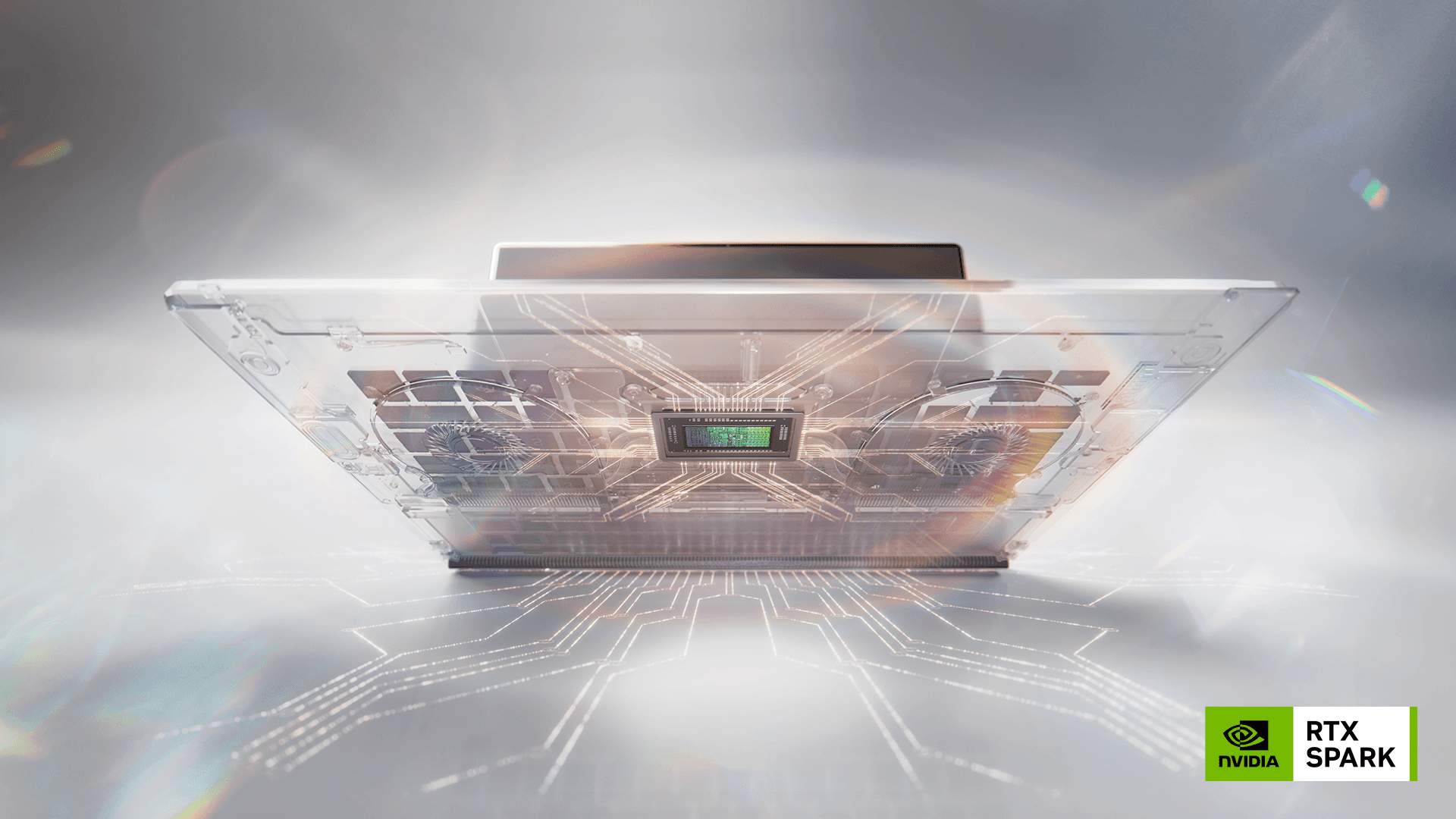
NVIDIA's latest generation of AI-focused processors and technologies is beginning to appear across major laptop manufacturers and next-generation Windows devices. Companies including Microsoft, Dell, HP, Lenovo, ASUS, and Razer are investing heavily in AI-capable hardware designed specifically for modern creative workloads.
Rather than simply delivering faster rendering speeds, these systems are being built around AI acceleration from the ground up.
This shift represents something much bigger than a standard hardware upgrade.
The Rise of NVIDIA-Powered AI PCs
NVIDIA's latest generation of AI-focused processors and technologies is beginning to appear across major laptop manufacturers and next-generation Windows devices. Companies including Microsoft, Dell, HP, Lenovo, ASUS, and Razer are investing heavily in AI-capable hardware designed specifically for modern creative workloads.
Rather than simply delivering faster rendering speeds, these systems are being built around AI acceleration from the ground up.
This shift represents something much bigger than a standard hardware upgrade.
Why This Matters for Creatives
The creative industry is entering a new era where artificial intelligence is becoming integrated into almost every stage of production.
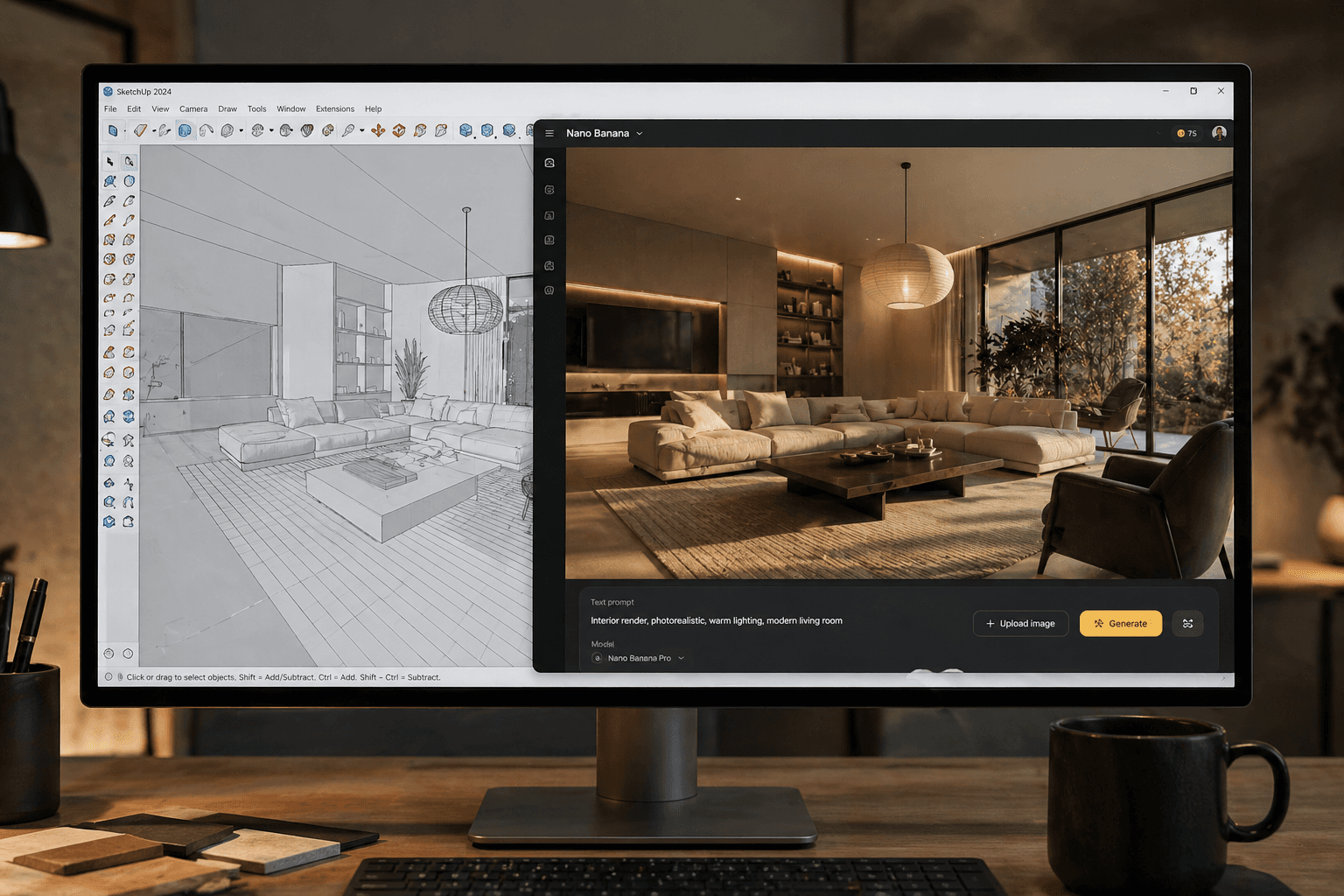
Architectural visualisers, CGI artists, photographers, filmmakers, and designers are already using AI-assisted tools for:
Image generation
Video generation
Texture creation
Upscaling
Scene optimisation
Object removal
Motion tracking
Real-time rendering
3D reconstruction
Gaussian splatting workflows
Many of these tools rely heavily on NVIDIA's CUDA ecosystem and RTX acceleration.
As AI becomes a larger part of creative production, having dedicated AI hardware inside a laptop could dramatically reduce processing times and allow creators to work more efficiently from anywhere.
Why This Matters for Creatives
The creative industry is entering a new era where artificial intelligence is becoming integrated into almost every stage of production.
Architectural visualisers, CGI artists, photographers, filmmakers, and designers are already using AI-assisted tools for:
Image generation
Video generation
Texture creation
Upscaling
Scene optimisation
Object removal
Motion tracking
Real-time rendering
3D reconstruction
Gaussian splatting workflows
Many of these tools rely heavily on NVIDIA's CUDA ecosystem and RTX acceleration.
As AI becomes a larger part of creative production, having dedicated AI hardware inside a laptop could dramatically reduce processing times and allow creators to work more efficiently from anywhere.
The Surface Ultra and the Future of Mobile Workstations
Microsoft's latest Surface devices signal a broader trend across the Windows ecosystem.
For years, creative professionals often chose MacBooks because they delivered exceptional battery life while remaining powerful enough for mobile workflows.
However, NVIDIA's new AI-focused architecture could help Windows manufacturers close that gap.
Imagine a lightweight laptop capable of:
Real-time AI image generation
Instant texture creation
Local large language model processing
Real-time video enhancement
GPU-accelerated rendering
Complex 3D visualisation
High-quality viewport performance
For professionals working in architectural visualisation and CGI, this could fundamentally change how projects are delivered.
The Surface Ultra and the Future of Mobile Workstations
Microsoft's latest Surface devices signal a broader trend across the Windows ecosystem.
For years, creative professionals often chose MacBooks because they delivered exceptional battery life while remaining powerful enough for mobile workflows.
However, NVIDIA's new AI-focused architecture could help Windows manufacturers close that gap.
Imagine a lightweight laptop capable of:
Real-time AI image generation
Instant texture creation
Local large language model processing
Real-time video enhancement
GPU-accelerated rendering
Complex 3D visualisation
High-quality viewport performance
For professionals working in architectural visualisation and CGI, this could fundamentally change how projects are delivered.
What This Means for Architectural Visualisation
As someone working daily within architectural visualisation, I've already seen how quickly AI tools are becoming part of the creative process.
Tasks that previously took hours can now be completed in minutes.
The next evolution isn't simply faster rendering. It's the convergence of AI, GPU computing, and real-time workflows.
Technologies such as:
NVIDIA RTX
Gaussian Splatting
Neural Rendering
AI-assisted modelling
Real-time ray tracing
are creating opportunities for smaller studios and independent artists to produce work that previously required much larger teams.
The ability to process these technologies directly on a portable workstation could be a major advantage.
What This Means for Architectural Visualisation
As someone working daily within architectural visualisation, I've already seen how quickly AI tools are becoming part of the creative process.
Tasks that previously took hours can now be completed in minutes.
The next evolution isn't simply faster rendering. It's the convergence of AI, GPU computing, and real-time workflows.
Technologies such as:
NVIDIA RTX
Gaussian Splatting
Neural Rendering
AI-assisted modelling
Real-time ray tracing
are creating opportunities for smaller studios and independent artists to produce work that previously required much larger teams.
The ability to process these technologies directly on a portable workstation could be a major advantage.
Is Windows About to Regain the Crown?
Apple's influence on the creative industry cannot be understated.
The MacBook remains one of the most impressive portable computers ever produced, and Apple Silicon has set a high standard for performance per watt.
However, NVIDIA continues to dominate the AI ecosystem.
From ChatGPT-powered applications to image generation, autonomous robotics, digital twins, real-time rendering, and emerging spatial computing workflows, NVIDIA hardware sits at the centre of many of the technologies shaping the future of creative work.
If Windows manufacturers can successfully combine NVIDIA's AI capabilities with the portability and efficiency that creatives expect, we may be witnessing the beginning of a significant shift in the industry.
For the first time in years, Windows laptops are not simply competing on specifications.
They're competing on the future of creativity itself.
Is Windows About to Regain the Crown?
Apple's influence on the creative industry cannot be understated.
The MacBook remains one of the most impressive portable computers ever produced, and Apple Silicon has set a high standard for performance per watt.
However, NVIDIA continues to dominate the AI ecosystem.
From ChatGPT-powered applications to image generation, autonomous robotics, digital twins, real-time rendering, and emerging spatial computing workflows, NVIDIA hardware sits at the centre of many of the technologies shaping the future of creative work.
If Windows manufacturers can successfully combine NVIDIA's AI capabilities with the portability and efficiency that creatives expect, we may be witnessing the beginning of a significant shift in the industry.
For the first time in years, Windows laptops are not simply competing on specifications.
They're competing on the future of creativity itself.